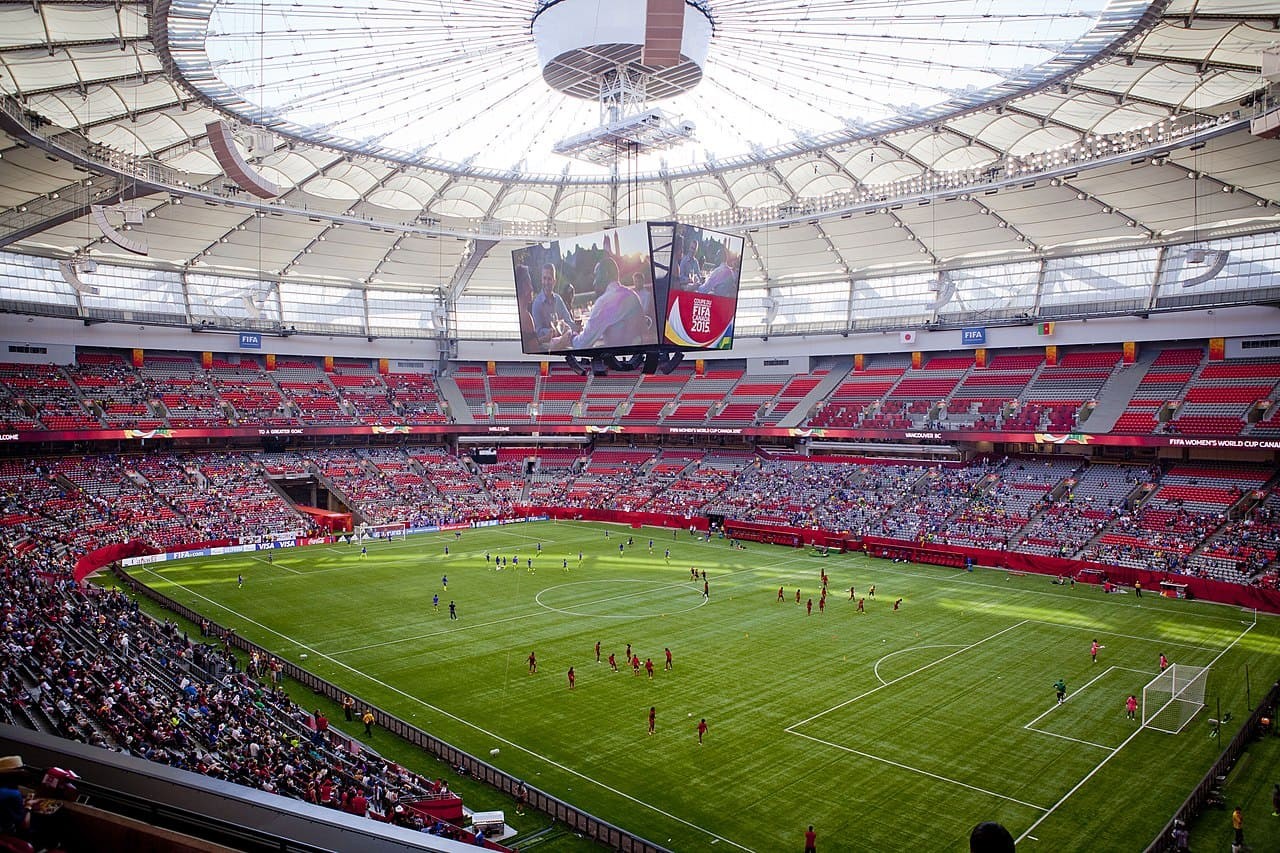

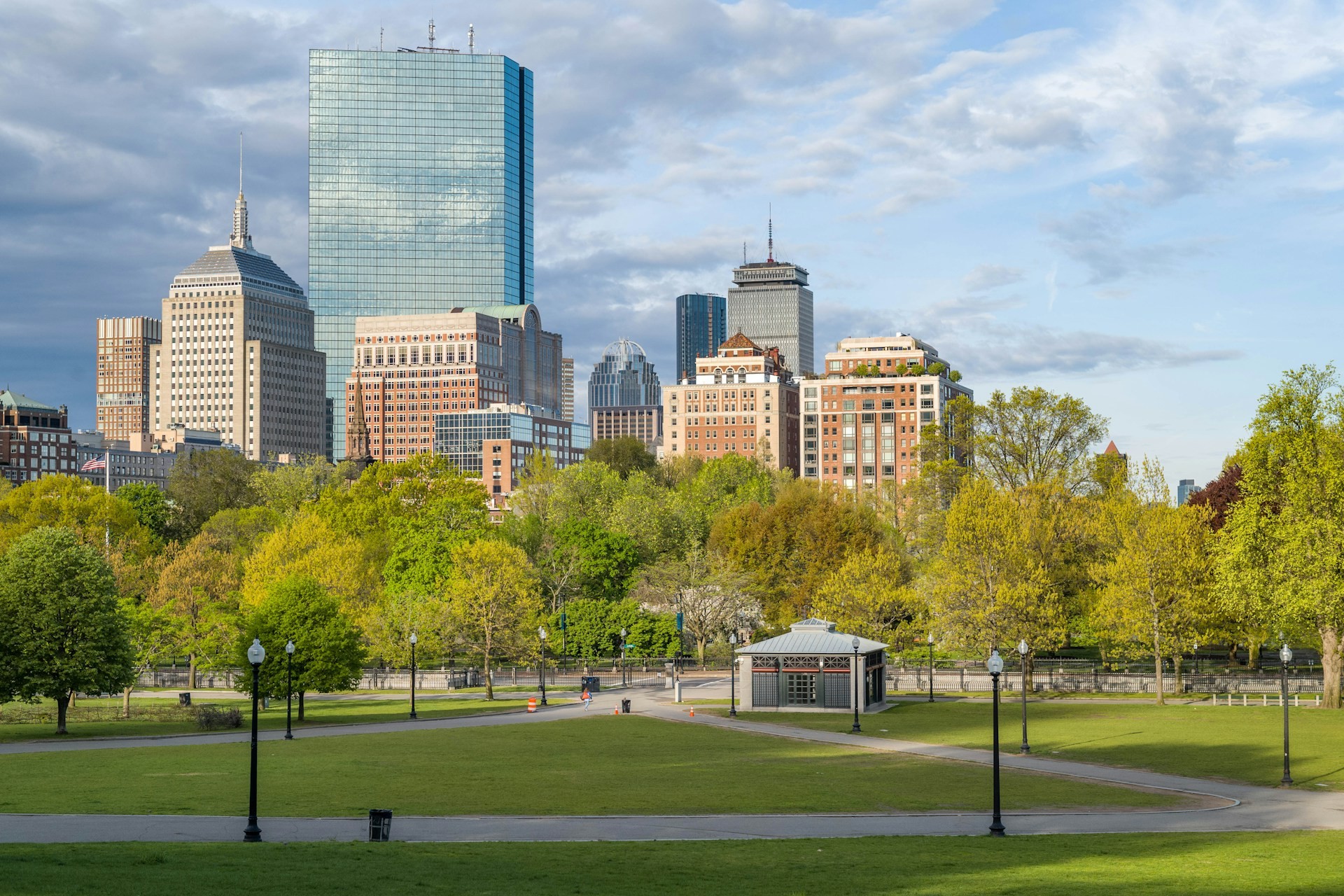
Gillette Stadium is in Foxborough, 30 miles south of downtown Boston, and hosts seven matches in 2026: five group stage games and both a Round of 32 and a quarterfinal. On match days, the commuter rail runs direct from South Station; on non-match days, you have one of the most historically significant and walkable cities in North America to explore at your own pace.
Boston moves at a human scale. Most of the important things are within a mile or two of each other, and the neighbourhoods have retained the feel of a city that was built for walking, not driving.
1. The Freedom Trail
The Freedom Trail is a 2.5-mile brick path through central Boston linking 16 sites from the American Revolution, all within walking distance of each other. It begins at Boston Common (the oldest public park in the United States) and ends at the Bunker Hill Monument in Charlestown, passing through the North End and Faneuil Hall along the way. The trail takes three to four hours to walk properly if you stop at most sites. The highlights: the Paul Revere House (the oldest remaining structure in downtown Boston, built around 1680), the Old North Church where two lanterns were hung to signal the British advance in 1775, and the USS Constitution — the world’s oldest commissioned naval vessel still afloat, open to visitors in Charlestown Navy Yard. The trail is self-guided and marked with a painted red line; maps are free.
2. The North End — Boston’s Little Italy
The North End is one of Boston’s oldest and most characterful neighbourhoods, and it concentrates better Italian food per block than many cities in Italy. Hanover Street and Salem Street are lined with pasta restaurants, bakeries, and café terraces. Giacomo’s Ristorante on Salem Street is a cash-only neighbourhood institution with handmade pasta and long queues; Mike’s Pastry on Hanover Street sells cannoli, tiramisu, and Italian cookies that people queue for specifically. The neighbourhood is dense, old, and walkable — the streets are narrow enough that the buildings on either side nearly meet overhead. Go in the evening, when the restaurants are open and the street life is at its most animated.
3. Beacon Hill
Beacon Hill is the most visually intact historic neighbourhood in Boston: Federal-style rowhouses in red brick, gas-lit lanterns on the streets, a slope descending from the gold-domed Massachusetts State House to the Public Garden below. Acorn Street is the most photographed cobblestone alley in the city. The Public Garden — adjacent to Boston Common — has swan boats on the central pond (a Boston institution since 1877) and formal plantings that are especially good in early June. The hill is small enough to walk from top to bottom in 15 minutes; plan to wander rather than go anywhere specific.
4. Back Bay — Newbury Street and the Boston Public Library
Back Bay was built on filled land in the 1850s through 1880s, and the architecture is notably different from the organic street plan of older Boston: long parallel avenues crossed by numbered streets, lined with Victorian brownstones. Newbury Street is the best street for shopping and eating; the price point gets cheaper as you move further from the Public Garden. Trident Booksellers & Café at 338 Newbury is an independent bookshop with an attached café open until midnight, and is genuinely one of the better café-bookshop combinations in the country. The Boston Public Library on Copley Square has one of the most beautiful reading rooms in America — free to enter, worth an hour if you’re passing.
5. Fenway Park
Built in 1912 and the oldest active professional baseball park in the United States, Fenway is worth visiting even if you have no particular interest in baseball. The Red Sox play a home schedule from April through September; a summer game here — with the Green Monster (the 11-metre left-field wall) looming, and a frankfurter in hand — is a thoroughly American afternoon. The park seats 37,755 and is best experienced from the green bleacher seats in the outfield or the grandstand on the first base line. Check the schedule at mlb.com/redsox; the match day atmosphere starts building on Yawkey Way (now Jersey Street) outside the park two hours before first pitch.
6. Harvard and Cambridge
A 20-minute Red Line subway ride from downtown Boston brings you to Cambridge and Harvard Square — one of the more agreeable combinations of university town and city neighbourhood in the country. The Harvard campus is open to the public; the Harvard Art Museums (free on Saturday mornings) hold one of the most comprehensive university art collections in the world, including the Fogg, Busch-Reisinger, and Arthur M. Sackler collections under one roof. For food in the area, Flour Bakery + Café on Mass Ave does excellent sandwiches and pastries. Brattle Street west of the square has independent bookshops, cinemas, and coffee.
7. Boston’s Seafood — Clam Chowder, Lobster, and Oysters
Boston’s position on the Atlantic makes its seafood genuinely worth prioritising. Clam chowder (the thick, cream-based New England version, emphatically not the tomato-based Manhattan kind) is served everywhere but varies enormously — Legal Sea Foods at multiple locations is consistent; Neptune Oyster in the North End is smaller, excellent, and has a long queue for dinner. The Union Oyster House on Union Street claims to be America’s oldest restaurant still in continuous operation (since 1826), and the oyster bar at the ground floor counter is the reason to go. Island Creek Oysters in the Back Bay is the more contemporary option, with oysters from the company’s own beds in Duxbury.
8. Isabella Stewart Gardner Museum
One of the most distinctive museums in the United States, the Gardner is built around a Venetian palazzo-style courtyard that Gardner designed herself and filled with paintings, sculptures, tapestries, and objects collected during decades of travel through Europe and Asia. The courtyard, with a glass ceiling and flowering plants year-round, is extraordinary. The collection includes Titian’s Europa (one of the most important Renaissance paintings in North America), Rembrandt, Velázquez, and Sargent’s large portrait of Gardner herself. The empty frames on the wall mark where 13 works were stolen in 1990 — the largest art theft in history, still unsolved. Admission around $20.
Getting to Gillette Stadium from Boston is easiest by MBTA Commuter Rail (Providence/Stoughton Line) from South Station. Journey time is around 45 minutes. If you’re arriving at South Station by Amtrak or bus and want to leave your bags before exploring, Stasher has luggage storage near Boston South Station and Back Bay.
Luggage storage in Boston
With Gillette Stadium 30 miles from the city, match days often mean early starts and late finishes. Stasher has luggage storage locations across Boston — near South Station, Back Bay, and North Station — so you can store your bags and spend the day walking the Freedom Trail or eating your way through the North End before catching the train to Foxborough.