
- What Sports-Trippers Really Care About in 2026
- 1. London — The World’s Best City for Sports-Tripping
- 2. Dubai — A Rising Sports Powerhouse
- 3. Tokyo — The Best Value Sports City
- 4. Melbourne and 5. Dublin — Culture, Identity and Atmosphere
- Strong Performers Outside the Top Five
- Emerging Sports Cities: High Investment, Mixed Results
- What the Rankings Reveal About the Future of Sports Travel
- The Future of Sports-Tripping
Sports tourism has quietly become one of the most influential forces in global travel. What was once limited to die-hard supporters following their team is now a mainstream way to plan entire holidays — with fixtures, finals and tournaments shaping where people go, how long they stay, and how much they spend.
New research by Stasher shows that sports tourism now accounts for around 10% of global travel spending, and that nearly 30% of people have already travelled – or would consider travelling – abroad for a major sporting event. With 2026 set to feature the FIFA World Cup, Winter Olympics and Commonwealth Games, that momentum is only accelerating.
But the research also reveals something more nuanced: modern sports-trippers are no longer satisfied with just attending an event. They want atmosphere, context and experiences that extend well beyond the stadium gates.
To understand which cities deliver that best, Stasher analysed 50 global cities, ranking them across a wide range of sporting and tourism factors — from elite teams and international events to affordability, safety, equality, sports bars and sport-related attractions.
What Sports-Trippers Really Care About in 2026
The data highlights a clear evolution in how fans choose destinations.
- Two thirds of people say a city’s wider sports tourism offering matters a great deal or somewhat when booking a trip
- Fans increasingly want things to do before and after matchday, especially when tickets are expensive or hard to secure
- Affordability, safety and ease of getting around now carry almost as much weight as the event itself
This shift explains why cities with deep, year-round sporting ecosystems consistently outperform those that rely on one-off mega-events.
1. London — The World’s Best City for Sports-Tripping
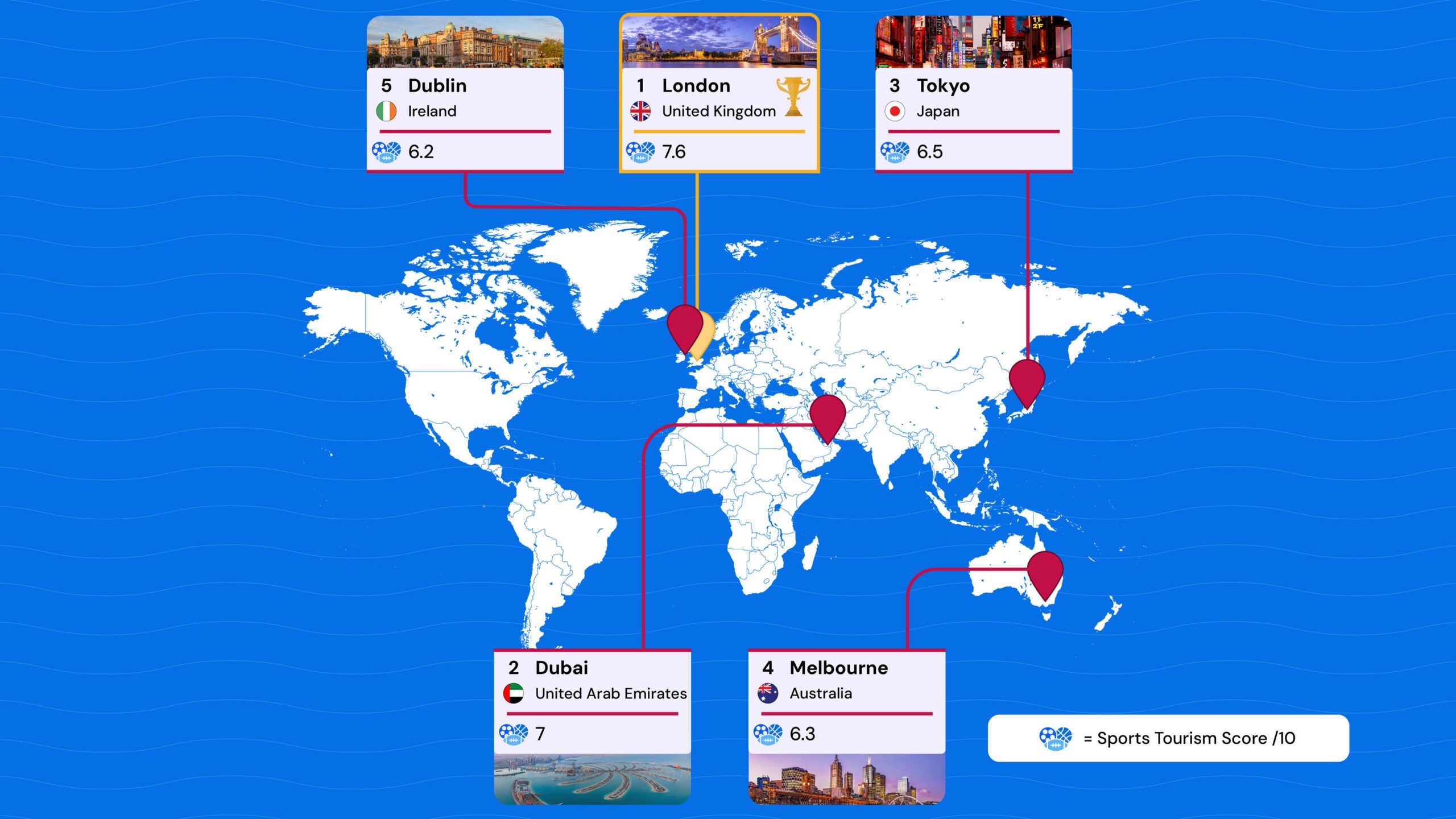
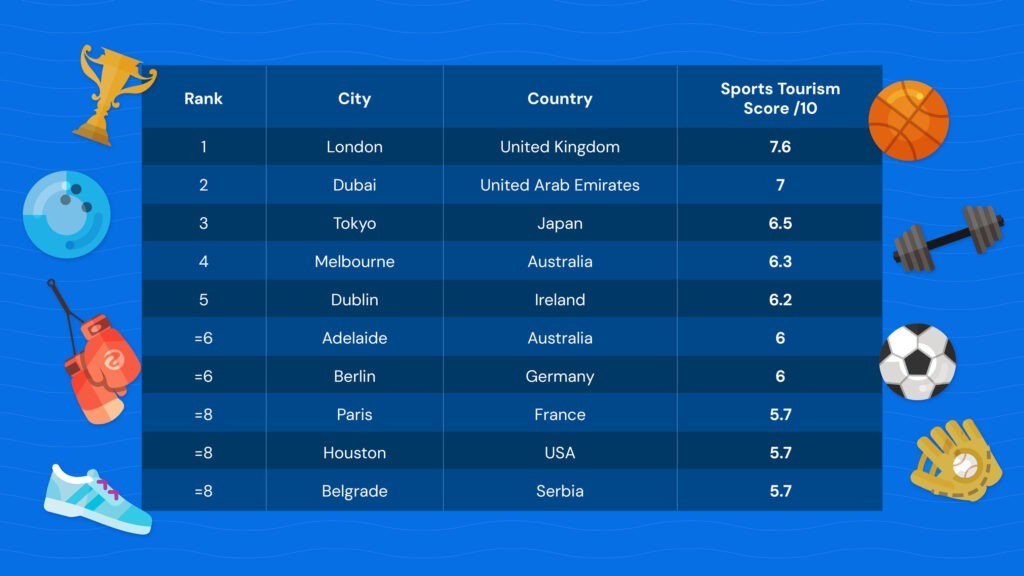
Overall score: 7.6 / 10
London tops the rankings by offering the most complete sports-tripping experience of any city analysed.
Its advantage lies in density and diversity. Few cities allow visitors to watch elite football, rugby, cricket, basketball and tennis — often on the same weekend — while also offering stadium tours, museums and Olympic legacy attractions.
London also performs exceptionally well for international events, hosting more major competitions across 2025–26 than any other city studied.
The main drawback is affordability. Food, drink and transport costs are among the highest in the rankings. However, the data suggests many sports-trippers are willing to absorb higher prices in exchange for variety, prestige and atmosphere.
2. Dubai — A Rising Sports Powerhouse
Overall score: 7.0 / 10
Dubai’s second-place finish reflects the rapid rise of newer sports destinations, particularly in the Gulf.
The city excels at safety, infrastructure and social viewing experiences, boasting one of the highest numbers of sports bars per capita in the study. For fans without tickets, Dubai offers a polished, high-energy environment built around shared spectatorship.
However, its relative lack of sport-related attractions beyond live events limits its ability to challenge London for the top spot. The data suggests that long-term success in sports tourism depends on heritage and storytelling, not just scale.
3. Tokyo — The Best Value Sports City
Overall score: 6.5 / 10
Tokyo ranks third by offering something increasingly rare in global sports tourism: exceptional value without sacrificing quality.
The city combines a packed international events calendar with some of the lowest average costs for meals, drinks and transport among the top-ranked cities. It also boasts the highest number of sport-related attractions in the entire study.
While Tokyo has fewer professional teams based locally, its affordability and breadth of experiences make it particularly attractive for longer stays and repeat visits.
4. Melbourne and 5. Dublin — Culture, Identity and Atmosphere
Melbourne (6.3/10) and Dublin (6.2/10) round out the top five, each excelling for different reasons.
Melbourne’s ranking reflects how deeply sport is embedded in everyday life, from cricket and rugby to motorsport and tennis. The city also performs well for equality and liveability, factors that increasingly influence travel decisions.
Dublin, meanwhile, punches above its weight by offering intimacy and atmosphere. Short distances between stadiums, pubs and accommodation make it easy for fans to immerse themselves in matchday culture, particularly for rugby and football.
Strong Performers Outside the Top Five
Beyond the top tier, several cities stand out for specific strengths — even if they fall short overall.
Paris and Madrid perform well for elite teams and sporting heritage, but score lower for affordability and transport costs. Both cities benefit from iconic clubs and venues, yet the data suggests rising prices may be dampening their appeal for longer sports-focused trips.
Houston is the best city in the U.S. for sports tourists, followed by New York in second and Los Angeles in third. Houston offers the largest number of sports bars and a standout selection of sport-related attractions and experiences, each highly rated by visitors. It’s also home to major league teams across football, basketball and beyond. Houston scores well for affordability, too. Public transport is inexpensive, with a typical one-way ticket averaging under £1 and domestic draft beer averages around £1.72 per pint — good news for anyone planning to soak up the atmosphere on game days.
New York boasts some of the highest-rated sports themed tourist attractions, the highest tourist safety score within the country and is home to several world-renowned teams including the New York Yankees, New York Knicks and New York Giants. However, the city understandably comes with higher food, drink and transport costs.
Los Angeles is a heavyweight sporting city with world-class venues, strong tourist infrastructure and endless off-pitch experiences for tourists. It’s both a confirmed host in the upcoming FIFA 2026 World Cup tournament and is exclusively hosting the 2028 Summer Olympic Games.
Munich and Amsterdam perform strongly for safety, transport efficiency and stadium access, making them appealing for short, well-organised trips — particularly around football tournaments.
Barcelona benefits from global sporting recognition, but its reliance on a small number of headline teams limits its overall score compared to cities with broader sporting ecosystems.
Emerging Sports Cities: High Investment, Mixed Results
The study also highlights the rapid emergence of new sports tourism hubs, particularly in the Middle East.
While cities such as Abu Dhabi perform respectably, others including Riyadh, Jeddah and Manama sit near the bottom of the rankings. The data suggests that while investment in events and infrastructure is accelerating, wider tourism offerings and accessibility have yet to catch up.
For sports-trippers who want more than the event itself, these destinations currently feel less complete.
What the Rankings Reveal About the Future of Sports Travel
- Experience beats scale: Cities with rich sporting ecosystems outperform those relying on single mega-events
- Affordability matters: Especially for younger travellers and multi-day trips
- Safety and equality are decisive: No longer secondary considerations
- Emerging sports cities are rising fast, but heritage remains a key differentiator
The Future of Sports-Tripping
As sports tourism continues to grow, the most successful destinations will be those that offer more than 90 minutes of action. Stadium tours, museums, fan zones, walkable neighbourhoods and affordable transport all shape whether a trip feels immersive or fleeting.
With 2026 set to be one of the biggest years in global sport, competition between cities is intensifying — and fans are becoming more selective.
The message from sports-trippers is clear: choose cities that let you live the sport, not just watch it.