

- What makes World Cup 2026 different?
- The host countries
- World Cup 2026 stadiums by country
- United States (11 stadiums)
- Canada (2 stadiums)
- Mexico (3 stadiums)
- World Cup match format explained
- Travelling between matches
- Bag policies & stadium security
- Fan zones & matchday atmosphere
- Weather & climate considerations
- Prepare for Kick-Off
The FIFA World Cup 2026 will be the biggest and most ambitious World Cup ever staged. For the first time in the tournament’s history, it will be hosted across three countries — the United States, Canada and Mexico — and will introduce a brand-new expanded format featuring 48 national teams. With more matches, more cities and more travelling fans than any previous edition, World Cup 2026 will feel less like a single tournament and more like a continent-wide sporting festival.
What makes World Cup 2026 different?
World Cup 2026 marks a major evolution of the tournament. Expanding from 32 to 48 teams increases the total number of matches from 64 to 104 games. This allows more nations to qualify, particularly from Africa, Asia and CONCACAF, giving the competition a broader global feel and introducing new fanbases to the World Cup stage.
The tournament will run for just over five weeks, from mid-June to mid-July 2026. Matches will be spread across a vast geographic area, from Vancouver on the Pacific coast to Miami on the Atlantic, and from Mexico City in the south to Toronto in the north.
The host countries
The United States will host the majority of matches, including all quarter-finals, semi-finals and the final. Expect large-capacity NFL stadiums, many of which are enclosed or climate-controlled — a major advantage during the North American summer.
Canada will host matches in Toronto and Vancouver, bringing the World Cup back to Canadian soil for the first time since 1986. Both cities offer central stadium locations with excellent public transport.
Mexico will host matches in Mexico City, Guadalajara and Monterrey. Mexico becomes the first country to host matches at three different World Cups, with Estadio Azteca once again taking centre stage.
World Cup 2026 stadiums by country
Matches will be played across 16 stadiums. Below is a full breakdown by host country.
United States (11 stadiums)
- MetLife Stadium – New York / New Jersey
- SoFi Stadium – Los Angeles
- AT&T Stadium – Arlington, Texas
- Mercedes-Benz Stadium – Atlanta
- NRG Stadium – Houston
- Lincoln Financial Field – Philadelphia
- Lumen Field – Seattle
- Levi’s Stadium – San Francisco Bay Area
- Gillette Stadium – Boston / New England
- Hard Rock Stadium – Miami
- Arrowhead Stadium – Kansas City
Canada (2 stadiums)
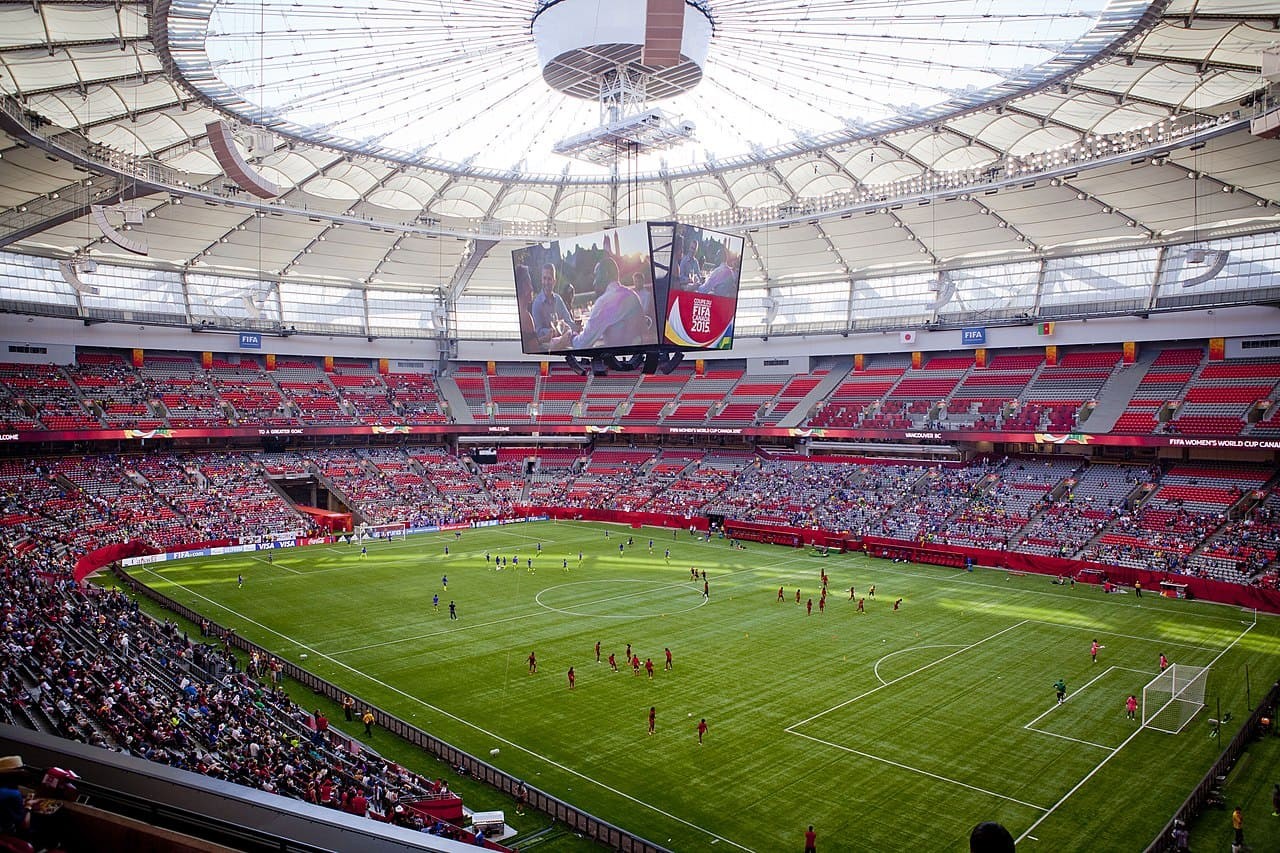
- BC Place – Vancouver
- BMO Field – Toronto
Mexico (3 stadiums)
- Estadio Azteca – Mexico City
- Estadio Akron – Guadalajara
- Estadio BBVA – Monterrey
World Cup match format explained
Teams will be divided into 12 groups of four. The top two teams from each group automatically qualify for the knockout rounds, along with the eight best third-placed teams. This introduces a Round of 32 for the first time in World Cup history.
From there, the tournament progresses through the Round of 16, quarter-finals, semi-finals, a third-place play-off and the final.
Travelling between matches
World Cup 2026 is designed for multi-city travel. Fans may attend one match in Mexico City, another in Texas and a third in New York — all within the same tournament. While this opens up incredible travel opportunities, it also introduces logistical challenges.
Flights between host cities can be long, border crossings may be required, and accommodation demand will be extremely high around key fixtures. Early planning is essential, particularly for knockout-stage matches.
Bag policies & stadium security
One of the most important practical considerations for World Cup 2026 is stadium bag policy. Most venues — particularly in the United States — operate clear-bag or small-bag-only rules, with no on-site luggage storage for suitcases or large backpacks.
Security screening will be more intense than for domestic league matches. Expect extended security perimeters, bag searches and controlled entry times. Fans arriving with oversized bags may be refused entry, even with a valid ticket.
Fan zones & matchday atmosphere
Host cities are expected to create official fan zones, public screenings and festival areas. These will act as social hubs for supporters, especially on non-match days or for fans without tickets.
Cities with central stadiums — such as Vancouver, Seattle and Toronto — are likely to feel especially vibrant, with fans walking between bars, restaurants and stadiums. Out-of-town stadiums will focus activity around transport hubs and official fan areas.
Weather & climate considerations
Weather conditions will vary significantly across host cities. Southern locations such as Miami, Houston and Mexico City can experience high heat and humidity, while cities like Seattle and Vancouver are generally milder.
Many U.S. stadiums are enclosed or partially roofed, but time spent outside — walking, queuing and travelling — will still be a major factor. Travelling light, staying hydrated and allowing extra time is strongly advised.
Prepare for Kick-Off
The FIFA World Cup 2026 will be unlike anything football fans have experienced before. With 48 teams, 104 matches, three host countries and 16 stadiums, it offers an unprecedented opportunity to combine elite football with travel across North America. At the same time, the expanded format, strict stadium security and vast distances make planning essential.
Understanding how the tournament works, where matches are played and how logistics differ from city to city will be key to enjoying the experience. With the right preparation, World Cup 2026 has the potential to be the most memorable and immersive football tournament ever staged.