
Houston is one of the most culturally diverse cities in the United States — home to over 145 languages and a restaurant scene that reflects genuinely everything. For World Cup visitors, that’s a significant advantage. You can eat your way across the world without leaving Harris County, and the city’s cultural institutions — particularly the Museum District — are among the strongest in the South.
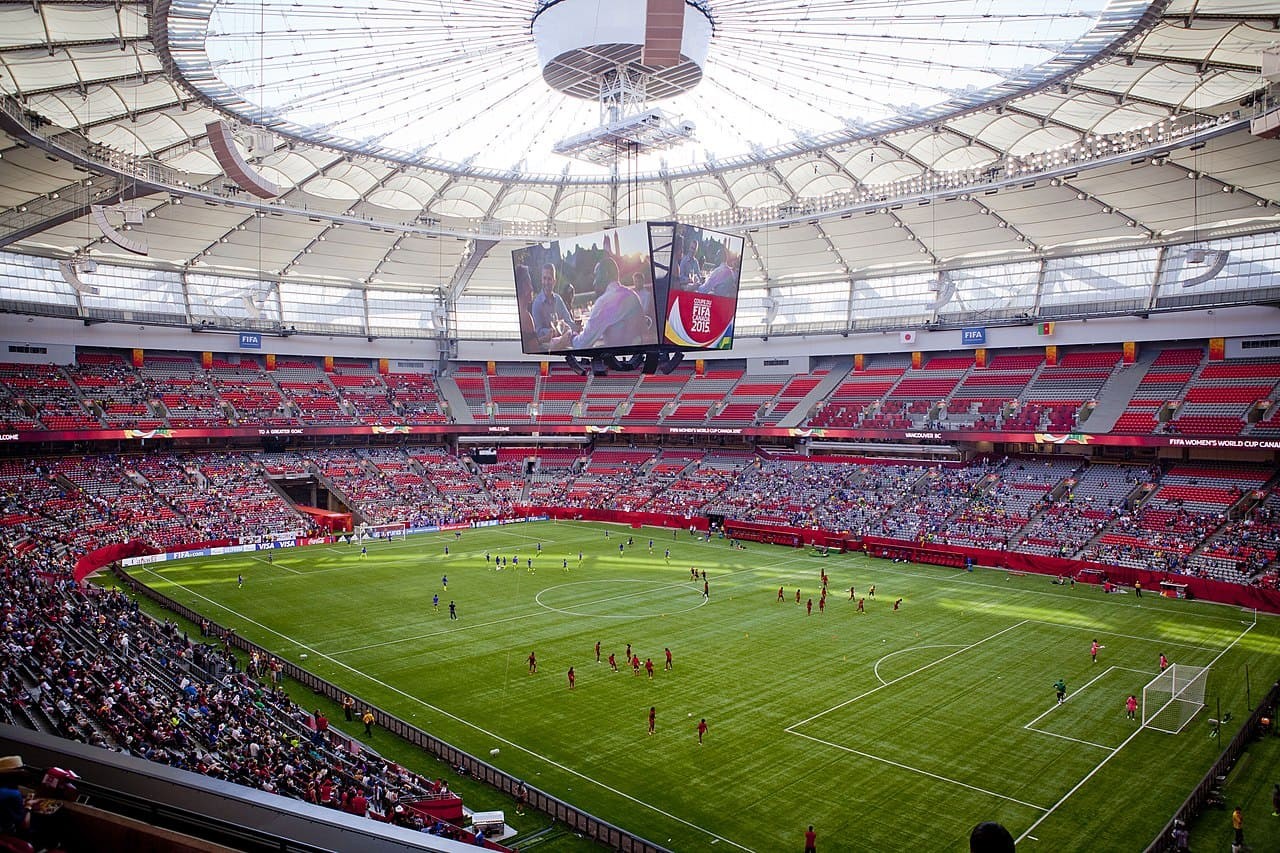
NRG Stadium hosts seven matches in 2026, including five group stage games, a Round of 32, and a Round of 16 on the 4th of July. The stadium is in the south of the city, about 4 miles from downtown, served by Houston’s METRORail.
1. Space Center Houston
The Johnson Space Center — NASA’s home for human spaceflight — sits 25 miles south of downtown Houston, and Space Center Houston is its public-facing museum and visitor complex. The centrepiece is Independence Plaza, where you can walk through a full-size replica of the Space Shuttle Independence mounted on top of a real Shuttle Carrier Aircraft. The Astronaut Gallery has suits, helmets, and personal effects from every NASA mission. Tram tours run to the actual Mission Control facility (where Apollo 13’s “Houston, we have a problem” call was received) and the Rocket Park, which has a Saturn V moon rocket lying on its side in a climate-controlled building — at 110 metres, it’s the largest rocket ever built, and seeing it horizontal and close up at full scale is extraordinary. Allow four to five hours. Admission around $35.
2. The Museum District
Houston’s Museum District is a walkable cluster of 19 cultural institutions within a half-mile radius of Hermann Park, most of them free. The Houston Museum of Natural Science has a strong permanent collection including the Hall of Meteorites (one of the largest in the world) and an outstanding Hall of the Americas covering pre-Columbian civilisations. The Museum of Fine Arts, Houston (MFAH) is one of the largest art museums in the United States, with exceptional holdings in African gold, Latin American art, and European painting. The Children’s Museum, the Health Museum, and the Holocaust Museum round out the district. Budget a full day if you want to do it properly.
3. The Menil Collection
A few minutes from the Museum District in the Montrose neighbourhood, the Menil Collection is one of the great private art museums in the world — free to enter, with no permanent crowd management issues. Houston oil heiress Dominique de Menil assembled an extraordinary collection of 20th-century art, African and Oceanic artefacts, Byzantine art, and Surrealist works. The Renzo Piano–designed building is filled with natural light through a sophisticated louvred ceiling. Adjacent on the Menil campus: the Rothko Chapel, a non-denominational chapel with 14 large Mark Rothko paintings on the walls; the Dan Flavin installation at Richmond Hall; and the Cy Twombly Gallery, which houses the largest collection of Twombly’s work in the world. Three separate buildings, all within a few minutes’ walk of each other, all free.
4. Tex-Mex — Where to Eat
Houston’s Tex-Mex scene is substantial and covers a range from working-class lunch counters to elevated restaurant cooking. For the classic version, Ninfa’s on Navigation Boulevard is the original: Mama Ninfa Laurenzo invented fajitas here in 1973 (the term itself originated from her kitchen), and the combination plate with tacos al carbon remains the reason to go. Lupe Tortilla, with several Houston locations, does reliable flour tortillas and fajitas in a more suburban setting. For a modern take, Hugo’s in Montrose does upscale regional Mexican cooking (not strictly Tex-Mex, but exceptional) with moles that take days to prepare and a margarita list that’s comprehensive in the best way.
5. Montrose Neighbourhood
Montrose is Houston’s most eclectic and walkable neighbourhood — a dense area of independent restaurants, coffee shops, bars, galleries, and bookshops between the Museum District and the Allen Parkway. Cuchara does Mexican regional cooking (Veracruz, Oaxaca, Mexico City) in a casual setting on Fairview Street. Cloud 10 Creamery makes ice cream with liquid nitrogen for individual orders — theatrical and genuinely delicious. Sig’s Lagoon is a small but well-regarded vinyl record bar. The neighbourhood is where much of Houston’s creative and LGBTQ+ community is based, and it has an energy in the evenings that makes it the best neighbourhood in the city for a bar crawl during the World Cup.
6. Buffalo Bayou Park
Buffalo Bayou runs through the centre of Houston and the park along its banks, stretching from downtown west toward the Shepherd Drive area, was redesigned in 2015 as one of the city’s best public spaces. The running and cycling path is 2.3 miles each way; the Cistern — a decommissioned water reservoir beneath the park with 221 concrete columns and extraordinary acoustic properties — hosts rotating art installations and is free to visit on weekend days. The Lost Lake section at the park’s eastern end has an observation deck with downtown views. The whole park is substantially more pleasant than you’d expect from a city known primarily for its cars.
7. The Heights
The Houston Heights is an early 20th-century neighbourhood north of downtown with independent restaurants, a weekend antiques market on 19th Street, and a walkable main strip. Coltivare is a farm-to-table Italian restaurant with a kitchen garden that supplies much of the menu; the daily pasta is usually exceptional. Goode’s Armadillo Palace on Kirby Drive (technically Upper Kirby, close enough) is a large Texas dance hall that books live country and roots music nightly — a genuinely Texan experience if you find yourself in the city on a Friday evening.
8. Galveston Day Trip
An hour south of Houston along Highway 45, Galveston is a barrier island city on the Gulf of Mexico with Victorian architecture, a warm beach, and a historic strand of shops and restaurants. The Galveston Island Historic Pleasure Pier extends over the Gulf. Gaido’s Seafood Restaurant on Seawall Boulevard has been serving Gulf seafood since 1911 — the fried shrimp platter and the Gulf snapper are the reason most Houstonians make the trip. The drive back at sunset, with the city on the horizon, is notably good.
9. Houston’s International Food Scene — Chinatown and Beyond
Houston’s Chinatown on Bellaire Boulevard (the actual Chinatown, not the original one near downtown that was demolished) is one of the largest and most authentic in the United States, stretching several miles along a suburban commercial strip. The range of regional Chinese cooking is exceptional — Sichuan, Cantonese, Shanghainese — and supplemented by Vietnamese, Korean, and other Asian cuisines in the same area. Dot Coffee Shop for Hong Kong-style milk tea; Mein for hand-pulled noodles; Crawfish and Noodles for the Louisiana-Vietnamese crawfish crossover that Houston has made its own. It’s about 20 minutes from NRG Stadium by car.
NRG Stadium is served by the METRORail Red Line to Stadium Park/Astrodome Station — the journey from downtown takes about 20 minutes. If you’re heading into the city from the airport before check-in, Stasher has luggage storage across Houston, so you can leave your bags and spend the day at the Menil Collection or in Montrose.
Luggage storage in Houston
Whether you’re flying in early, moving hotels, or just want a hands-free day exploring the Museum District, Stasher has luggage storage in Houston. Book online, drop your bags, and go find the best fajitas in the city.